
KEYNOTE ADDRESS
Reinventing Tire Development for the SDV Era: Closing the Loop through Connected Data and Digital Twin Transformation
Young Gon Shin
Vice-President, MSV Chassis Engineering Design Group
Chair, Tire System Expert Committee
Hyundai Motor Company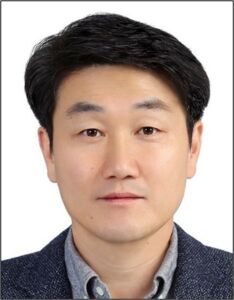
Young Gon Shin joined Hyundai Motor Company in 1997, where he is a senior engineering leader, focusing on ride and handling (R&H) performance development and chassis system design. In 2004, Mr. Shin earned an M.S. in Automotive Engineering from the University of Michigan–Ann Arbor. From 2010 to 2014, he worked at Hyundai America Technical Center, Inc. (HATCI), where he gained valuable insight into North American customer requirements and operating conditions.
Since 2023, Mr. Shin has been Vice President of Hyundai’s MSV Chassis Engineering Design Group and Chair of its Tire System Expert Committee, which develops mid-to long-term technology strategy and guides advanced technology development related to tires.
Mr. Shin brings nearly three decades of hands-on experience in the automotive industry. Leveraging his strong expertise in vehicle-level R&H development, he established a system-level chassis development framework based on target cascading. This model-based framework makes extensive use of measurement-based tire datasets to create more refined, quantitative targets.
Mr. Shin is integrating established tire big-data assets with vehicle data to develop AI- and statistics-based tire performance prediction technologies, improving accuracy in the early stages of development. In addition, he is developing data-driven decision-making methodologies to strengthen the Virtual Tire Development process.
PLENARY LECTURE
AI Agents in Tire R&D: Accelerating Design Cycles Across Lab, Track, and Simulation
Bruno FincoChief Technology Officer & Co-FounderMOVEdot
|

Girish RadhakrishnanChief Executive Officer & Co-FounderMOVEdot
|

PLENARY LECTURE
The Finite Element Method and Isogeometric Analysis: Past, Present, Future
Thomas J.R. Hughes
John O. Hallquist Distinguished Chair in Computational Mechanics, Peter O'Donnell Jr. Chair in Computational and Applied Mathematics
The University of Texas at Austin
Thomas J.R. Hughes is a Professor of Aerospace Engineering & Engineering Mechanics at The University of Texas at Austin and one of the most influential and widely cited scholars in computational and applied mechanics. His pioneering contributions to finite element methods and computational mechanics have had a profound and lasting impact on solid and fluid mechanics, engineering analysis, and simulation-based design across academia and industry.

Dr. Hughes previously held senior academic and leadership positions at Stanford University, where he served as Chair of Mechanical Engineering, Chair of Applied Mechanics, and Chair of Mechanics and Computation, after earlier appointments at UC Berkeley and Caltech. He is an elected member of the U.S. National Academy of Engineering, the U.S. National Academy of Sciences, and other leading international academies, reflecting his exceptional standing in the global research community.
A founder and past president of both the U.S. and International Associations for Computational Mechanics, Dr. Hughes has played a central role in shaping the field’s research directions, professional societies, and scholarly standards worldwide. He is the recipient of numerous highest-level honors, including ASME’s Medal and ASCE’s designation as Distinguished Member, along with many international awards recognizing lifetime achievement in engineering science and applied mathematics.
Dr. Hughes also served for decades as an editor of the flagship journal Computer Methods in Applied Mechanics and Engineering. His more recent work on isogeometric analysis has helped bridge computational geometry and analysis, significantly influencing modern simulation workflows and advancing the integration of design and analysis in engineering practice.
BANQUET SPEECH
The Data Intelligence Layer: Building Agentic Systems with Memory
Chris Chapman
Advisory Solutions Architect
MongoDB

Chris Chapman is an Advisory Solutions Architect at MongoDB, where he helps enterprises design and deploy AI-enabled systems built on modern cloud architecture. With 20 years of experience in statistical modelling, generative AI, AI agents, and vector search, Chris has worked as a software developer and architect for technology leaders such as AWS, Confluent,, and MongoDB.
He works with customers to build cloud-native frameworks integrating data streaming, event-driven patterns, and scalable microservices to support production-grade AI workloads. Chris is particularly passionate about applying these capabilities in complex, highly regulated industries, helping teams move from AI proofs of concept to resilient, secure systems of action in the cloud.